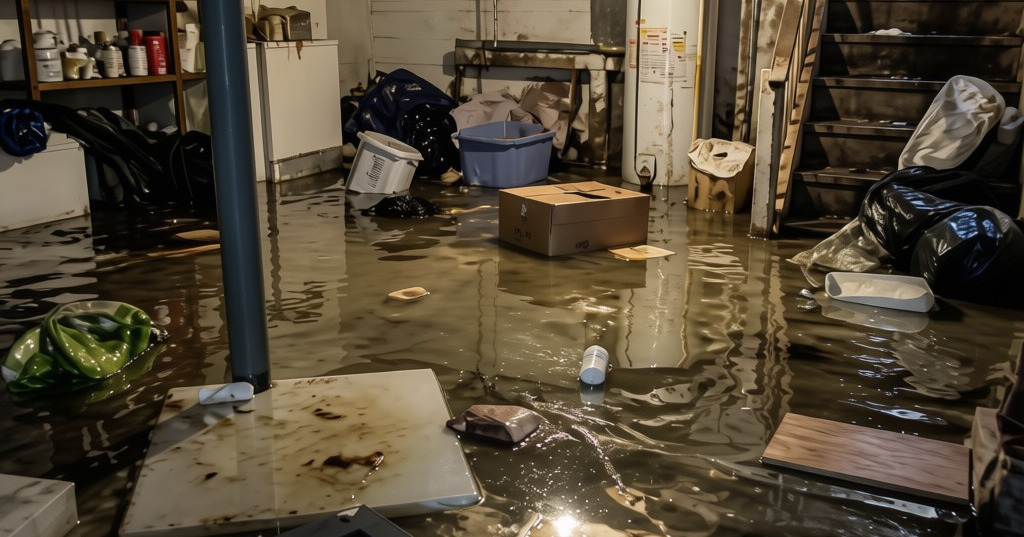
Basements are the part of the house most exposed to water — they sit below grade, next to soil that holds moisture, and often have the least ventilation in the home. Water damage in a basement ranges from a damp patch that dries on its own to standing water that requires full extraction and drying equipment. The right response depends heavily on which of those you’re actually dealing with, and on where the water is coming from.
Signs of Water Damage in a Basement
Basement water damage doesn’t always look like flooding. Common signs, roughly in order of severity:
- Musty smell — often the first sign, even before you see anything
- Efflorescence — white, chalky mineral deposits on concrete walls or floors, left behind as water evaporates through the material
- Damp or discolored patches on walls or floor, especially near the base of walls
- Peeling paint or bubbling on painted concrete
- Visible mold, typically black, green, or white, often in corners or behind stored items
- Warped baseboards or swollen drywall near the floor line
- Standing water — the clearest sign, but not the only one worth acting on
A basement that “smells damp” but shows no visible signs still has moisture getting in somewhere — it’s just not yet obvious where.
What Causes Basement Water Damage
- Hydrostatic pressure — groundwater builds up around the foundation after heavy rain and is literally pushed through hairline cracks in the concrete. This is the most common cause of a persistently damp basement and usually shows as seepage through walls or the floor-wall joint, not a single obvious leak point.
- Foundation cracks — settling, or freeze-thaw cycles, can crack the foundation enough for water to get through directly.
- Poor grading or drainage — if the ground around your home slopes toward the foundation instead of away from it, rainwater pools against the walls instead of running off.
- Sump pump failure — if your basement has a sump pump and it fails (power outage, mechanical failure, or it’s simply overwhelmed in a major storm), water that would normally be pumped out backs up.
- Window well leaks — basement window wells that fill with water and aren’t properly sealed or drained.
- Plumbing leaks or sewer backups — a different category entirely (see below), and usually more serious.
- Appliance leaks — a washing machine or water heater located in the basement failing.
Why the Cause Matters More in a Basement
Professional restorers classify water by contamination level using the IICRC S500 standard — Category 1 (clean), Category 2 (grey, e.g. from appliances), and Category 3 (black water, e.g. sewage backups or floodwater). In a basement specifically, this distinction changes the entire response:
- Groundwater seepage is typically Category 1 or borderline Category 2 depending on how long it’s been sitting — a manageable cleanup in most cases.
- A sewer backup or storm floodwater is Category 3 by default. Even a shallow layer of Category 3 water on a basement floor means porous materials it touched (drywall, carpet, insulation) generally need to be removed and replaced, not just dried — the contamination risk doesn’t go away once the water is gone.
If you’re not sure which you’re dealing with, treat it as Category 2 at minimum: wear gloves, avoid direct skin contact, and don’t run a household fan through the space until you know more.
DIY Cleanup vs. Calling a Professional
Reasonable to handle yourself if:
- It’s a small amount of clean water (a few inches or less, from a known clean source like a sump pump hiccup)
- You can remove the water and get the area drying within 24–48 hours
- There’s no sewage or floodwater involved
- The basement is unfinished (no drywall, carpet, or finished flooring to worry about)
Call a professional if:
- There’s standing water more than a couple of inches deep
- The basement is finished (drywall, carpet, or laminate flooring is involved) — these materials wick water upward and often need professional-grade extraction and drying equipment to fully dry from the inside
- The water source is a sewer backup or storm flooding (Category 3)
- Water has been sitting for more than 24–48 hours — the EPA notes mold can begin growing on wet material within that window
- You have an HVAC system, electrical panel, or gas appliances in the basement
Basic Cleanup Steps (Minor, Clean-Water Situations)
- Stop the source if possible — turn off the sump pump circuit if it’s malfunctioning, shut off a leaking appliance’s water supply.
- Remove standing water — a wet/dry shop vac works for small amounts; a submersible pump for anything deeper.
- Remove wet, non-salvageable items — cardboard boxes, unsealed paper, and porous items sitting in water for any length of time are usually not worth trying to save.
- Run fans and a dehumidifier to dry the space — aim for continuous airflow over several days, not just a few hours.
- Clean hard surfaces (concrete, tile) with a mild detergent, then a diluted bleach solution if there’s any odor or visible mold on non-porous surfaces.
- Monitor for a few days — a musty smell returning after the space seems dry usually means moisture is still trapped somewhere.
What It Costs
| Situation | Typical Cost Range |
|---|---|
| Minor cleanup, DIY (equipment rental only) | $50 – $200 |
| Professional water extraction, clean water | $500 – $1,500 |
| Full flooded basement cleanup (national average ~$4,000) | $2,000 – $7,000 |
| Category 3 (sewage) cleanup + affected material removal | Up to $10,000+ |
| Sump pump repair (minor) or replacement (full unit) | $400 – $2,100 |
Costs scale heavily with square footage (roughly $4–$12 per sq ft for extraction and drying), whether the basement is finished, and how long the water sat before cleanup started — a same-day response is consistently cheaper than a delayed one, since less material needs replacing. These figures are broadly consistent with 2026 data from Angi and HomeGuide.
Does Insurance Cover Basement Water Damage?
This is where basement claims get more complicated than other rooms. Standard homeowners policies generally cover sudden, accidental water damage (a burst pipe, a sudden appliance failure) but exclude:
- Flooding from external sources (storm surge, overflowing rivers, heavy rain pooling on the ground) — this requires separate flood insurance, typically through the National Flood Insurance Program (NFIP) or a private flood policy
- Sewer or drain backups — usually excluded unless you’ve added a specific sewer backup endorsement/rider
- Gradual seepage through foundation cracks — treated as a maintenance issue, not a covered peril, in most policies
A sump pump failure sits in a gray area — many insurers exclude it by default but offer it as an optional add-on (“sump pump overflow” or “water backup” coverage). If your basement has ever flooded or you rely on a sump pump, it’s worth checking specifically whether your policy includes that endorsement rather than assuming standard coverage applies.
Preventing Future Basement Water Damage
- Grade the soil around your foundation so it slopes away from the house (a common, often-overlooked fix)
- Clean and extend gutters/downspouts so water discharges well away from the foundation, not right next to it
- Test your sump pump twice a year, and consider a battery backup for power-outage protection during storms
- Seal foundation cracks as soon as they appear — small cracks get worse, not better, over time
- Install a French drain or interior drainage system if hydrostatic pressure is a recurring issue, not a one-time event
The Takeaway
A damp basement after heavy rain is common and usually manageable if you catch it early and the water is clean. What changes the calculus is contamination (sewage, floodwater) and how long the water sits — both push a basement issue from a weekend cleanup into a professional restoration job. Given how basement claims interact with flood and sewer backup exclusions, it’s worth reviewing your policy before you need it, not after.