If you’ve gotten a restoration company quote and it doesn’t look anything like the flat “$X per room” numbers you find online, that’s normal — professional water damage restoration isn’t priced like a typical home repair. It’s priced closer to an insurance claim: itemized, based on measured extent of damage, and built around industry classifications most homeowners have never heard of. Understanding that pricing structure makes it much easier to tell whether a quote is reasonable.
The Two Numbers That Drive Every Quote
Restoration companies follow the IICRC S500 standard, which classifies water damage on two separate scales:
- Category (1, 2, or 3) — how contaminated the water is. Category 1 is clean, Category 2 is grey water (appliance discharge, water sitting a day or more), Category 3 is black water (sewage, floodwater). Higher categories mean more materials get removed rather than dried, and more disinfection work.
- Class (1 through 4) — how much moisture was absorbed and how hard it will be to dry. Class 1 is the least (minimal absorption, small area), Class 4 is the most (deeply saturated materials like hardwood, plaster, or concrete requiring specialized drying).
A quote for a Category 1, Class 1 job (a small clean-water leak, quickly addressed) and a quote for a Category 3, Class 4 job (sewage backup into saturated flooring) can differ by a factor of 10 or more for a similarly sized area — the category and class, not the square footage alone, are what really drive the number.
What’s Actually on a Restoration Invoice
A typical itemized invoice includes:
| Line Item | What It Covers |
|---|---|
| Emergency water extraction | Pumping/vacuuming out standing water, usually priced per hour or flat per visit |
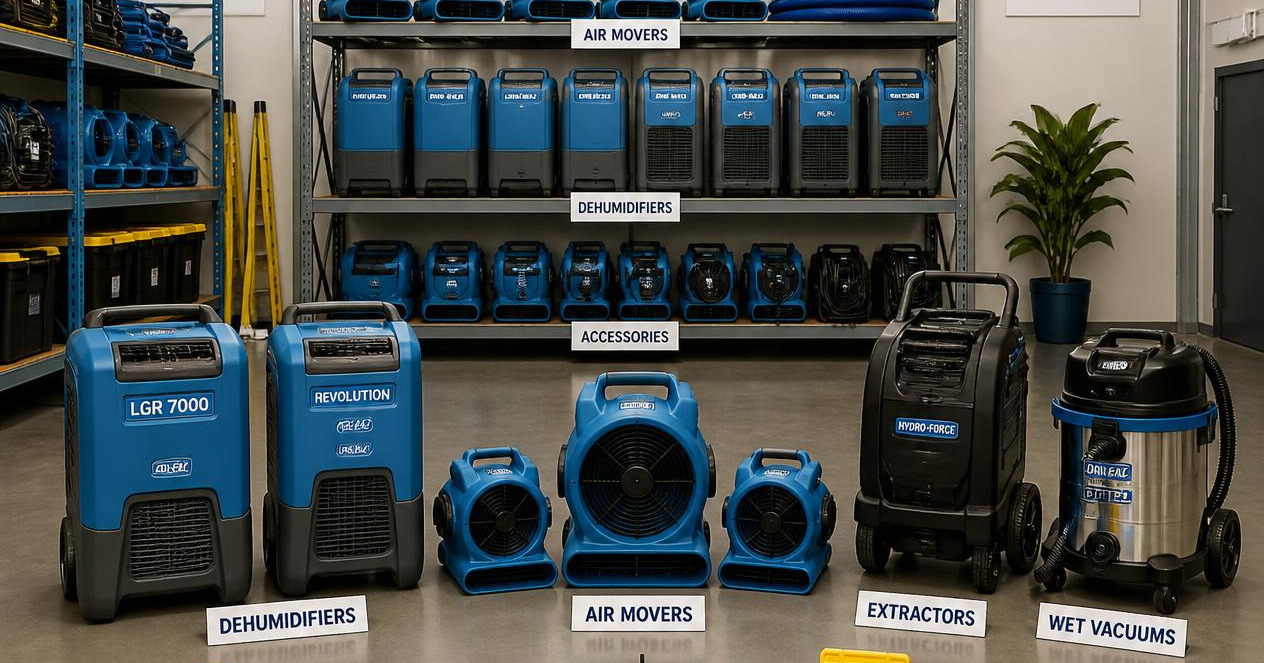
| Structural drying | Air movers, dehumidifiers, and daily monitoring — priced per day, per unit deployed |
| Antimicrobial/antibacterial treatment | Applied to affected surfaces, especially for Category 2/3 water |
| Demolition | Removing unsalvageable drywall, flooring, or insulation |
| Disposal | Hauling away removed materials |
| Content manipulation | Moving furniture and belongings out of the affected area during drying |
| Reconstruction | Rebuilding what was removed — often quoted separately from the restoration portion |
Reconstruction is frequently billed as a separate phase, sometimes by a different contractor entirely — the restoration company’s job is often just to stop the damage and dry the space, not rebuild it.
Typical Per-Square-Foot Rates
Rates scale directly with category, which is exactly why the category assessment (see above) drives the price more than square footage alone:
- Category 1 (clean water) extraction and drying: roughly $3–$4 per square foot
- Category 2 (grey water): roughly $4–$6.50 per square foot
- Category 3 (black water): roughly $7–$7.50+ per square foot, reflecting the extra disposal and disinfection work
- Reconstruction/repairs, once drying is complete: typically an additional $20–$37 per square foot for affected sections
- Equipment rental (if billed separately): commonly bundled into the extraction/drying rate rather than itemized
A 500 sq ft finished basement with Category 2 water and moderate saturation might run $2,000–$3,250 for extraction and drying alone, before any reconstruction. These figures are broadly consistent with 2026 industry cost data compiled by Palm Build and HomeAdvisor.
Why Two Quotes for the “Same” Job Can Differ Significantly
- Different category/class assessments — one company may assess water as Category 2, another as Category 1, based on how long it sat or where it came from. This alone can shift the price substantially.
- Equipment count — more air movers and dehumidifiers dry faster but cost more per day; some companies deploy more equipment for a shorter job, others less for longer.
- What’s included vs. billed separately — some quotes bundle reconstruction, others don’t. Compare like-for-like scope, not just the bottom-line number.
- Emergency/after-hours response — a same-night emergency call typically carries a premium over a scheduled next-day visit.
Questions Worth Asking Before You Sign
- What category and class are you assessing this as, and why?
- Is this quote for drying only, or does it include reconstruction?
- How many pieces of equipment will be running, and for how many days?
- Are you IICRC certified? (This is the standard industry certification — a company following it should be able to confirm it readily.)
- Will you provide daily moisture readings during the drying process?
Does Insurance Change the Pricing Conversation?
If you’re filing a claim, most restoration companies are used to working directly with insurance adjusters and pricing to industry-standard rates (many use estimating software like Xactimate, which insurers also use, so the numbers tend to line up). If you’re paying out of pocket, it’s worth asking whether a company’s estimating approach differs when there’s no insurer reviewing the invoice — reputable companies price consistently either way, but it’s a fair question to ask.
The Takeaway
Water damage restoration pricing isn’t arbitrary, but it also isn’t a simple per-room rate — it’s built around measured category and class, itemized like an insurance estimate. A quote that skips the category/class assessment and just gives you a flat number is harder to evaluate and worth double-checking against a second opinion, especially for anything beyond a small, clearly clean-water job.